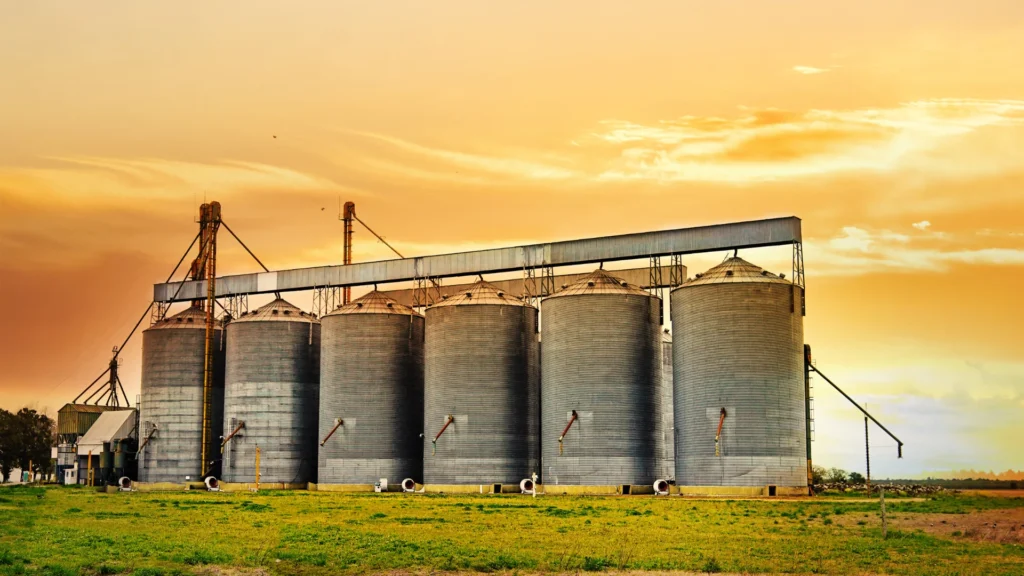
Modern agriculture and industrial storage systems, silos play a very important role in preserving bulk materials safely and efficiently. Silos are widely used for storing grains, seeds, cement, animal feed, chemicals, and other bulk products in large quantities. Among different types of silos, Grain Silos are especially important in the agriculture industry for maintaining the quality and safety of stored grains.
With the increasing demand for efficient storage solutions, industries and agricultural sectors are investing in advanced silo systems that offer better protection, longer storage life, and improved material handling.
What is a Silo? (Meaning of Silo)
A silo is a large storage structure used to store bulk materials such as grains, cement, fly ash, food products, chemicals, and other industrial materials. Silos help protect stored materials from moisture, contamination, and environmental damage while ensuring efficient handling and controlled discharge.
Silos help protect stored materials from moisture, pests, contamination, and environmental damage while ensuring easy loading and unloading operations.
What is a Grain Silo? Grain Silo Meaning
A grain silo is a tall storage structure specifically designed for storing large quantities of grains such as wheat, rice, corn, barley, soybeans, and other agricultural products. Grain silos help protect harvested crops from moisture, pests, birds, and environmental damage while maintaining their quality for extended periods.
Grain silos are commonly used in farms, food processing plants, grain terminals, and agricultural storage facilities to ensure safe and efficient storage before distribution or processing.
Full Form of SILO? Define Silo
The term “Silo” is not an acronym and does not have an official full form. It is simply the name of a storage structure designed for bulk material storage.
What is a Silo Used For?
Silos are widely used in various industries for storing:
- Cement
- Fly Ash
- Grain and Food Products
- Sand and Aggregates
- Chemicals and Powders
- Animal Feed
- Biomass Materials
Importance of Silos and Grain Silos
Proper storage is essential for preventing product loss and maintaining quality during long-term storage. Silos help industries and farmers manage large quantities of materials efficiently while minimizing wastage and operational challenges.
Benefits of Using Silos
- Safe bulk material storage
- Reduced material wastage
- Protection from moisture and contamination
- Better inventory management
- Easy loading and unloading operations
- Improved storage efficiency
- Long-term preservation of products
- Reduced labor requirements
Types of Silos: Storage Solution
Different types of silos are available according to storage material, capacity, and industrial requirements.
1. Tower Silos
Tower silos are tall vertical cylindrical structures commonly used for storing grains, silage, and bulk agricultural products.
Features
- Large storage capacity
- Space-saving vertical design
- Suitable for long-term storage
- Strong and durable construction
Applications
- Grain storage
- Animal feed storage
- Agricultural farms
2. Hopper Bottom Silos
Hopper bottom silos have a conical bottom structure that allows easy discharge of stored materials through gravity flow.
Features
- Quick material unloading
- Reduced material blockage
- Efficient material handling
- Easy cleaning and maintenance
Applications
- Grain storage facilities
- Food processing plants
- Industrial bulk material storage
3. Flat Bottom Silos
Flat bottom silos are widely used for storing very large quantities of grains and agricultural products.
Features
- High storage capacity
- Cost-effective storage solution
- Suitable for permanent installations
- Strong structural stability
Applications
- Large grain storage plants
- Agricultural warehouses
- Export and trading facilities
4. Cement Silos
Cement silos are specially designed for storing cement, fly ash, and construction materials.
Features
- Dust control systems
- Moisture-resistant storage
- Efficient material discharge
- Heavy-duty construction
Applications
- Construction projects
- Concrete batching plants
- Cement industries
5. Bolted Steel Silos
Bolted silos are manufactured using prefabricated steel panels assembled at the installation site.
Features
- Easy transportation
- Quick installation
- Expandable design
- Durable galvanized structure
Applications
- Grain storage
- Industrial material storage
- Temporary and permanent storage systems
Uses of Grain Silo
- Storage of Grains – Grain silos are used for storing wheat, rice, maize, corn, and other agricultural products safely in bulk quantity.
- Protection from Moisture – Silos help protect grains from rain, humidity, and moisture damage that can spoil stored products.
- Prevents Pest Infestation – Properly sealed grain silos reduce the risk of insects, rodents, and contamination during storage.
- Long-Term Preservation – Grain silos maintain grain quality and freshness for long-duration storage requirements.
- Used in Flour and Rice Mills – Silos provide continuous grain supply for milling and food processing industries.
- Efficient Bulk Handling – Modern silos support easy loading, unloading, and transportation of grains with automated systems.
- Reduces Storage Losses – Grain silos minimize wastage caused by spoilage, leakage, and environmental exposure.
- Supports Agricultural Farms – Farmers use grain silos to safely store harvested crops before selling or processing.
- Used in Food Processing Industry – Silos help maintain clean and organized storage of raw materials for food production.
- Improves Inventory Management – Grain silos allow industries and farms to manage large grain quantities efficiently and systematically.
Advantages: Grain Silos
- Maintains Grain Quality – Grain silos help preserve freshness, nutritional value, and overall quality of stored grains for long periods.
- Prevents Moisture Damage – Silos protect grains from humidity, rainwater, and moisture that can cause spoilage and fungal growth.
- Reduces Pest Infestation – Proper storage systems minimize the risk of insects, rodents, and contamination in stored grains.
- Minimizes Storage Losses – Grain silos reduce wastage caused by environmental exposure, leakage, and improper storage conditions.
- Efficient Bulk Storage – Silos allow safe storage of large quantities of grains in an organized and space-saving manner.
- Easy Material Handling – Modern silo systems support smooth loading, unloading, and grain transportation operations.
- Improves Operational Efficiency – Automated systems in grain silos reduce manual labor and improve overall productivity.
- Protects Against Weather Conditions – Silos safeguard grains from sunlight, wind, rain, and temperature fluctuations.
Why Choose Ryvontek Infra?
Ryvontek Infra is a well-known Grain Storage Silo manufacturer, offering advanced Silos and Grain Silos manufactured using premium-grade materials and precision engineering. Our storage systems are designed to deliver durability, efficient storage performance, and long operational life for agricultural and industrial applications. These grain silos are available in different capacity ranges and are suitable for storing various grains, seeds, maize, wheat, rice, corn, animal feed, and other bulk agricultural products safely and efficiently.
The company provides:
- Customized silo solutions
- High-quality galvanized steel silos
- Reliable structural design
- Efficient material handling systems
- Low maintenance storage solutions
- Installation and technical support
Conclusion
Silos and Grain Silos are essential storage solutions for modern agriculture and industrial material handling applications. These systems help maintain product quality, reduce wastage, improve operational efficiency, and support safe bulk material storage. Different types of silos are available according to industry requirements, storage capacity, and material type.
With advanced engineering, durable construction, and reliable storage performance, Ryvontek Infra provides high-quality Silos and Grain Silos suitable for agricultural farms, food industries, grain storage facilities, and industrial bulk storage applications.