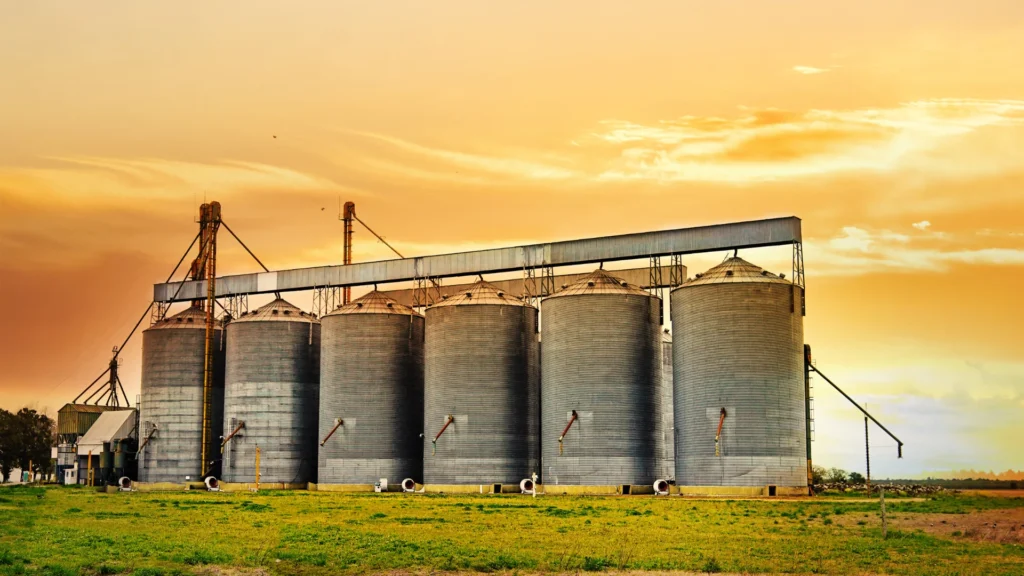
Grain storage is an important part of agriculture and food processing. After harvesting, grains such as wheat, rice, maize, barley, and other cereals need to be stored safely until they are transported, processed, or sold. Proper storage helps protect grains from moisture, insects, contamination, temperature changes, and spoilage.
Two commonly used structures for grain storage are grain bins and silos. Although people sometimes use these terms interchangeably, they can have different designs, capacities, applications, and handling systems.
In this blog, we will explain the difference between grain bins and silos, their major features, applications, advantages, and how to choose the right storage solution for your business.
What Is a Grain Bin?
Grain bin is a storage structure specifically designed to store dry agricultural grains. Grain bins are commonly used on farms, grain collection centers, warehouses, and agricultural facilities.
Most modern grain bins are cylindrical and manufactured using galvanized steel or other durable materials. They are designed to protect stored grains from external environmental conditions while allowing proper aeration and grain handling.
Grain bins are generally available in different sizes and capacities depending on the quantity of grain that needs to be stored.
Common Features of Grain Bins
- Cylindrical steel construction
- Galvanized or corrosion-resistant surfaces
- Aeration and ventilation systems
- Temperature monitoring
- Easy grain loading and unloading
- Access doors and inspection openings
- Different capacity options
- Suitable for short- and medium-term grain storage
Grain bins are particularly popular among farmers because they provide a practical way to store harvested grain directly at or near the farm.
What Is a Grain Silo?
A Grain silo is a large storage structure designed to store bulk agricultural products, including grains, cereals, seeds, and other dry materials. Grain silos are widely used by food processing industries, grain traders, agricultural companies, mills, feed manufacturers, and large-scale storage facilities.
Grain silos are generally engineered for higher-capacity storage and may be integrated with complete grain handling systems. These systems can include conveyors, bucket elevators, loading equipment, unloading mechanisms, aeration systems, temperature sensors, and grain cleaning equipment.
Depending on the application, silos can be manufactured from galvanized steel, stainless steel, concrete, or other suitable materials.
Grain Bins vs. Silo: What’s the Difference?
The biggest difference between grain bins and silos is not always the shape. In many cases, both can be cylindrical. The difference is generally related to scale, application, storage requirements, design, and integration with material-handling systems.
1. Storage Capacity
Grain bins are often used for smaller or medium-scale grain storage, particularly on farms and agricultural properties.
Grain silos can be designed for significantly larger storage capacities. Industrial grain storage facilities may use multiple silos to store large quantities of grain in separate compartments.
However, there is no universal capacity limit that separates a grain bin from a silo. The terminology can vary between regions and industries.
2. Application
Grain bins are commonly used for:
- Farm-level grain storage
- Harvested crop storage
- Temporary grain storage
- Agricultural storage facilities
- Small and medium-scale operations
Grain silos are commonly used for:
- Large grain storage terminals
- Food processing plants
- Flour mills
- Rice mills
- Feed manufacturing plants
- Grain trading facilities
- Commercial warehouses
- Industrial agricultural operations
3. Grain Handling Systems
A grain bin may have relatively simple loading and unloading arrangements.
Industrial silos are often connected to a complete grain handling system. Conveyors and bucket elevators can move grain between receiving areas, cleaning equipment, dryers, storage silos, and processing sections.
This makes silos suitable for large-scale operations where continuous grain movement is required.
4. Aeration and Temperature Control
Both grain bins and silos can use aeration systems to maintain appropriate storage conditions.
Aeration fans circulate air through the stored grain and help control temperature and moisture. Large industrial silos can also incorporate advanced temperature monitoring systems that help operators identify hot spots inside the stored grain.
Proper aeration is important because excessive moisture and heat can lead to mold growth, insect activity, grain deterioration, and loss of quality.
5. Construction and Design
Grain bins are frequently made from galvanized steel because it provides durability and resistance to corrosion.
Grain silos may be manufactured from galvanized steel, stainless steel, concrete, or other materials depending on the product being stored and the required capacity.
Industrial silos are usually designed according to specific loading conditions, material characteristics, site requirements, and handling systems.
Advantages of Grain Bins
Grain bins offer several benefits for agricultural users.
Cost-Effective Storage
For farmers and smaller operations, grain bins can provide an economical solution for storing harvested crops.
Easy Installation
Many steel grain bins can be installed relatively quickly compared with large permanent storage structures.
Better Grain Protection
A properly designed grain bin can protect crops from rain, pests, dust, and other external factors.
Flexible Capacity
Bins are available in various capacities, allowing users to select storage according to their requirements.
Aeration Capability
With suitable aeration equipment, stored grain can be maintained under better temperature and moisture conditions.
Advantages of Grain Silos
Grain silos are particularly beneficial for large-scale storage and industrial applications.
High Storage Capacity
Multiple silos can provide substantial storage capacity without requiring excessive ground space.
Efficient Material Handling
Silos can be integrated with conveyors, elevators, feeders, and automated handling systems.
Better Inventory Management
Separate silos can be used for storing different grains, grades, batches, or raw materials.
Improved Grain Quality Management
Temperature sensors, aeration systems, and monitoring equipment can help maintain grain quality during storage.
Suitable for Industrial Operations
Silos can be designed for integration with flour mills, rice mills, feed plants, food processing facilities, and other industrial applications.
Which Is Better: Grain Bin or Grain Silo?
There is no single answer because the right option depends on your storage requirements.
A grain bin can be a good choice when you need practical storage for harvested crops at a farm or small-to-medium agricultural facility.
A grain silo may be more suitable when you need high-capacity storage, automated grain handling, multiple storage compartments, or integration with an industrial processing facility.
Before selecting a storage structure, consider factors such as:
- Type of grain
- Required storage capacity
- Storage duration
- Available space
- Moisture and temperature conditions
- Loading and unloading requirements
- Aeration requirements
- Material-handling equipment
- Future expansion plans
- Budget
Why Choose a Reliable Grain Silo Manufacturer?
The performance of a grain storage system depends greatly on its design, construction quality, material selection, and installation.
A reliable manufacturer can help select the appropriate silo capacity, structure, aeration arrangement, discharge system, and accessories according to the application.
Ryvontek Infra is a leading grain silo manufacturer offering durable and application-oriented grain storage solutions for agricultural and industrial requirements. The company focuses on designing and manufacturing storage systems according to customer requirements, available space, grain characteristics, and capacity needs.
Choosing an experienced grain silo manufacturer can help ensure that the storage structure is properly designed for strength, durability, safe grain handling, and long-term operation.
Conclusion
Grain bins and grain silos both play an important role in protecting and storing agricultural products, but their typical applications and system requirements can differ.
Grain bins are commonly associated with farm-level and smaller-scale grain storage, while grain silos are widely used for high-capacity commercial and industrial storage. However, the terminology is not strictly standardized, so the actual design and application are more important than the name.
Whether you need a grain bin for agricultural storage or a large grain silo for an industrial facility, selecting the right capacity, material, aeration system, and handling equipment is essential.