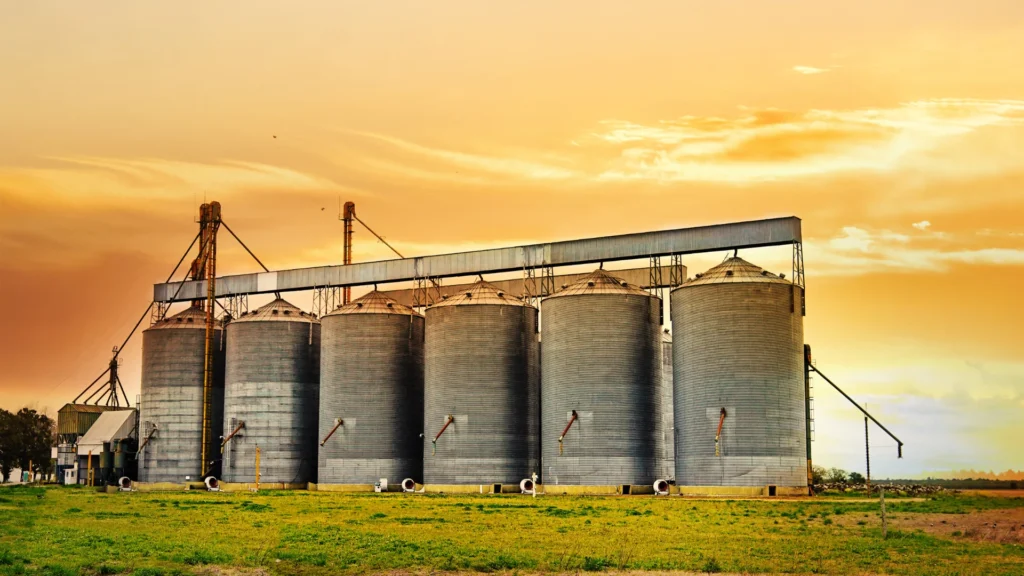
India is one of the world’s major agricultural producers, making efficient grain storage an important part of the food supply chain. After harvesting, grains such as wheat, rice, maize, barley, pulses, and other cereals need to be stored under controlled conditions to protect them from moisture, pests, contamination, and quality loss. Grain storage silos in India have become an effective solution for storing large quantities of agricultural commodities safely and efficiently.
Modern silos offer much more than simple storage space. With improved materials, aeration systems, temperature monitoring, loading and unloading equipment, and automated controls, today’s grain storage systems can help maintain grain quality while reducing handling losses and operational costs.
Grain Storage Silos: Advanced Storage Solutions
Grain Storage Silo is a specially designed storage structure used to hold bulk agricultural grains for short-term or long-term periods. Unlike traditional warehouses where grains are generally stored in bags, silos allow grains to be stored and handled in bulk.
A typical grain silo system may include the silo body, foundation, roof, aeration system, temperature monitoring equipment, conveyors, elevators, discharge mechanisms, and control systems.
These systems are commonly used by food-processing industries, grain traders, flour mills, rice mills, feed manufacturers, agricultural businesses, and large-scale storage facilities.
Why Are Grain Storage Silos Important in India?
Grain quality can deteriorate when stored under unsuitable conditions. High humidity, temperature variations, insects, rodents, and poor ventilation can contribute to spoilage and weight loss.
A properly designed silo helps provide a controlled storage environment. It can also simplify grain handling because loading, storage, aeration, and discharge can be integrated into one system.
Some major benefits include:
- Efficient bulk grain storage
- Better utilization of available space
- Reduced dependence on bag storage
- Easier loading and unloading
- Improved grain handling efficiency
- Protection from external contamination
- Better monitoring of stored grain
- Reduced manual handling
- Suitable for large storage capacities
Innovations in Grain Storage Silos
The grain storage industry has developed significantly with the introduction of modern monitoring and handling technologies. These innovations help operators improve storage conditions and reduce grain losses.
1. Advanced Temperature Monitoring
Temperature sensors can be installed at different levels inside a silo to monitor grain conditions. Regular monitoring can help identify unusual temperature changes that may indicate moisture migration, insect activity, or localized grain heating.
Early detection allows operators to take corrective action before grain quality is significantly affected.
2. Automated Aeration Systems
Aeration is an important part of grain storage. Fans circulate air through the stored grain to help manage temperature and moisture conditions.
Modern systems can be operated according to temperature and environmental conditions, helping improve storage efficiency and grain quality.
3. Efficient Grain Handling Systems
Modern silo facilities often integrate equipment such as bucket elevators, belt conveyors, screw conveyors, chain conveyors, and other material-handling systems.
These systems help move grain between receiving points, cleaning equipment, silos, processing areas, and dispatch sections.
4. Improved Monitoring and Automation
Digital control systems can bring different parts of a grain storage facility together. Operators can monitor silo temperatures, aeration conditions, grain movement, and equipment operation from a centralized system.
Automation can reduce manual intervention and improve operational consistency.
5. Improved Silo Designs
Modern silo designs focus on structural strength, efficient grain flow, easy maintenance, and long service life. Design considerations include storage capacity, grain characteristics, local climatic conditions, foundation requirements, and material-handling arrangements.
Materials Used for Grain Storage Silos
The choice of material depends on storage capacity, grain type, environmental conditions, budget, and project requirements.
Galvanized Steel
Galvanized steel is widely used for grain silos because of its strength and resistance to corrosion. The galvanized coating provides additional protection against environmental exposure and can contribute to a longer service life.
Carbon Steel
Carbon steel can be used for different structural and storage applications when appropriate protective coatings are provided. It offers good mechanical strength and can be fabricated according to specific design requirements.
Stainless Steel
Stainless steel is generally selected for applications where higher corrosion resistance or specific hygiene requirements are important. It can be particularly useful in specialized food-processing environments.
Advantages of Grain Storage Silos
- Better Space Utilization: Silos use vertical space effectively, allowing large quantities of grain to be stored within a comparatively compact footprint.
- Reduced Grain Handling: Bulk storage eliminates much of the manual movement associated with bag-based storage. Mechanical conveying systems can transport grain between different stages of the facility.
- Better Grain Protection: A properly engineered silo can help protect grain from rain, dust, pests, rodents, and other external factors. Proper aeration and monitoring further support grain quality management.
- Faster Loading and Unloading: Integrated elevators and conveyor systems allow grains to be loaded and discharged efficiently, which can reduce handling time during receiving and dispatch.
- Long-Term Storage Capability: With suitable grain preparation, aeration, monitoring, and operational practices, silos can support long-term storage while helping maintain the quality of stored commodities.
- Improved Inventory Management: Bulk silo systems can make it easier to measure, monitor, and manage grain inventories. Multiple silos can also be used to segregate different grain varieties, grades, or batches.
Applications of Grain Storage Silos
Grain storage silos in India are used across a wide range of agricultural and industrial applications, including:
- Wheat storage
- Rice storage
- Maize storage
- Barley storage
- Pulses and legumes
- Animal feed ingredients
- Flour mill operations
- Rice milling plants
- Grain processing facilities
- Feed manufacturing plants
- Agricultural warehouses
- Large-scale grain handling terminals
How to Choose the Right Grain Storage Silo?
Selecting a suitable silo requires consideration of several technical and operational factors.
Storage Capacity
Determine the quantity of grain that needs to be stored and whether additional capacity may be required in the future.
Grain Type
Different grains have different flow, moisture, density, and storage characteristics. The silo design and handling system should be suitable for the intended commodity.
Climate and Location
Temperature, rainfall, humidity, wind conditions, and other local environmental factors should be considered during silo design.
Aeration Requirements
An appropriate aeration system should be selected based on silo size, grain type, climate, and storage duration.
Material Quality
The construction material and protective coating should be selected according to the operating environment and expected service life.
Grain Handling Equipment
The overall system should include suitable conveyors, elevators, cleaning equipment, weighing systems, and discharge arrangements according to the facility’s requirements.
Grain Storage Silos from Ryvontek Infra
Ryvontek Infra provides reliable solutions for grain storage and handling requirements. As a grain silo manufacturer, our company focuses on developing durable and application-oriented storage systems for agricultural and industrial facilities.
We can provide customized Grain storage silo solutions based on storage capacity, grain type, site conditions, and operational requirements. The complete system can be planned to support efficient grain receiving, storage, monitoring, handling, and discharge.
For industries looking to improve bulk grain storage, investing in a properly designed silo system can provide better space utilization, efficient handling, improved inventory management, and greater protection of stored commodities.
Conclusion
Grain storage silos in India are becoming an increasingly important part of modern agricultural infrastructure. Compared with conventional storage methods, properly designed silos can provide efficient bulk storage, better handling, improved monitoring, and effective utilization of available space.
Advancements in galvanized steel construction, aeration, temperature monitoring, automation, and material-handling equipment are making modern silo systems more efficient and reliable. With the right design and operating practices, grain storage facilities can reduce avoidable losses while maintaining the quality of stored commodities.
For customized and dependable grain storage solutions, Ryvontek Infra can help businesses develop silo systems suited to their specific storage and handling requirements.