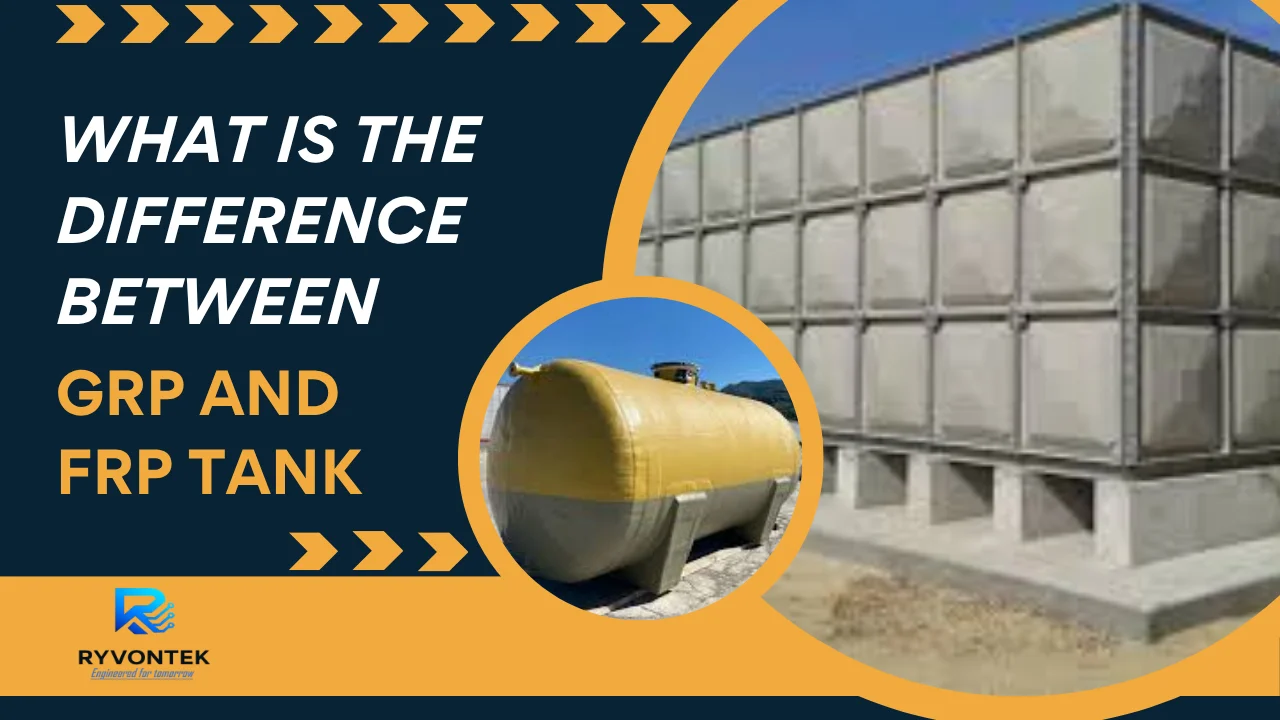
Water storage is a critical requirement across residential, commercial, and industrial sectors. Highly efficient water tank not only ensures safe storage but also improves durability, hygiene, and long-term cost efficiency. GRP and FRP Water Tank are popular modern solutions. While these two terms are often used interchangeably, they are not exactly the same. Understanding the difference between GRP and FRP water tanks can help you make an informed decision based on your specific application and requirements.
Understanding FRP Water Tanks
FRP, or Fiber Reinforced Plastic, is a composite material made by combining a polymer resin with reinforcing fibers. These fibers can include glass, carbon, or aramid, depending on the application. The result is a strong, lightweight, and corrosion-resistant material that is widely used in water storage, chemical processing, and industrial applications.
FRP water tanks are typically manufactured as single-piece molded structures. This makes them easy to install and ideal for locations where space is limited. Due to their seamless construction, FRP tanks have a lower risk of leakage and are known for their durability in various environmental conditions.
Understanding GRP Water Tanks
GRP, or Glass Reinforced Plastic, is actually a type of FRP where glass fibers are specifically used as the reinforcing material. GRP water tanks are generally designed as modular panel tanks, which are assembled on-site. These panels are manufactured in standard sizes and then bolted together to create a tank of the required capacity.
GRP tanks are highly popular for large-scale water storage applications such as commercial buildings, hospitals, schools, factories, and municipal projects. Their modular design allows for flexibility in size, making it possible to construct tanks with very large capacities.
Difference Between GRP vs FRP Water Tank
Both GRP (Glass Reinforced Plastic) and FRP (Fiber Reinforced Plastic) water tanks are widely used for water storage due to their strength, corrosion resistance, and durability. While they are closely related, they differ in composition, structure, and application.
| Feature | GRP Water Tank | FRP Water Tank |
|---|---|---|
| Full Form | Glass Reinforced Plastic | Fiber Reinforced Plastic |
| Material | Uses glass fiber as reinforcement | Can use glass, carbon, or other fibers |
| Structure | Modular panel-based design | Single-piece molded structure |
| Installation | Assembled on-site | Pre-fabricated, ready to install |
| Capacity | Suitable for large storage requirements | Best for small to medium capacities |
| Transportation | Easy (panels transported separately) | Difficult for large sizes |
| Maintenance | Easy (individual panels can be replaced) | Moderate (repair may require full tank work) |
| Durability | High | High |
| Cost | Cost-effective for large projects | Cost-effective for smaller applications |
| Applications | Commercial, industrial, municipal projects | Residential, commercial, industrial use |
Advantages of FRP Water Tanks
FRP water tanks offer several benefits that make them a popular choice:
- Lightweight and easy to handle
- High strength and durability
- Corrosion and chemical resistance
- Seamless construction reduces leakage risk
- Low maintenance requirements
- Suitable for a wide range of applications
Advantages of GRP Water Tanks
GRP water tanks are preferred for large and complex installations due to their unique advantages:
- Modular design for flexible capacity
- Easy transportation and on-site assembly
- Long service life with minimal maintenance
- Excellent resistance to corrosion and weather conditions
- Hygienic and safe for potable water storage
- Easy repair with replaceable panels
Applications of GRP and FRP Water Tanks
Both GRP and FRP tanks are widely used across various sectors:
- Residential water storage
- Commercial buildings and complexes
- Hospitals and healthcare facilities
- Hotels and resorts
- Industrial water and chemical storage
- Firefighting water storage systems
- Municipal water supply projects
GRP tanks are typically chosen for large infrastructure projects, while FRP tanks are more common in compact and medium-scale applications.
How to Choose the Right Tank?
Selecting between GRP and FRP water tanks depends on several factors:
- Capacity Requirement: For large volumes, GRP is the better option.
- Installation Space: Limited space favors FRP tanks.
- Transportation Constraints: GRP is ideal for difficult-to-access locations.
- Budget: FRP is cost-effective for smaller needs, while GRP offers better scalability.
- Maintenance Needs: GRP provides easier repair options.
Understanding these factors helps in choosing the most suitable solution for your project.
Why Choose Ryvontek Infra?
Ryvontek Infra is a trusted provider of high-quality water storage solutions, offering both GRP and FRP water tanks tailored to diverse customer needs. With a strong focus on innovation, durability, and performance, the company ensures that every tank is manufactured using premium materials and advanced technology.
At Ryvontek Infra, customer satisfaction is a top priority. Our team of experienced professionals works closely with clients to deliver customized solutions that meet specific requirements. Whether it is a small residential setup or a large industrial project, Ryvontek Infra provides reliable, leak-proof, and long-lasting water storage systems.
Conclusion
Both GRP and FRP water tanks are excellent choices for modern water storage, offering durability, corrosion resistance, and long service life. The main difference lies in their structure, capacity, and installation methods. While FRP tanks are ideal for smaller, ready-to-use applications, GRP tanks provide unmatched flexibility and scalability for large projects.
By understanding these differences, you can select the right tank that meets your specific needs. Partnering with a reliable company like Ryvontek Infra ensures that you get high-quality products, expert guidance, and long-term value for your investment.