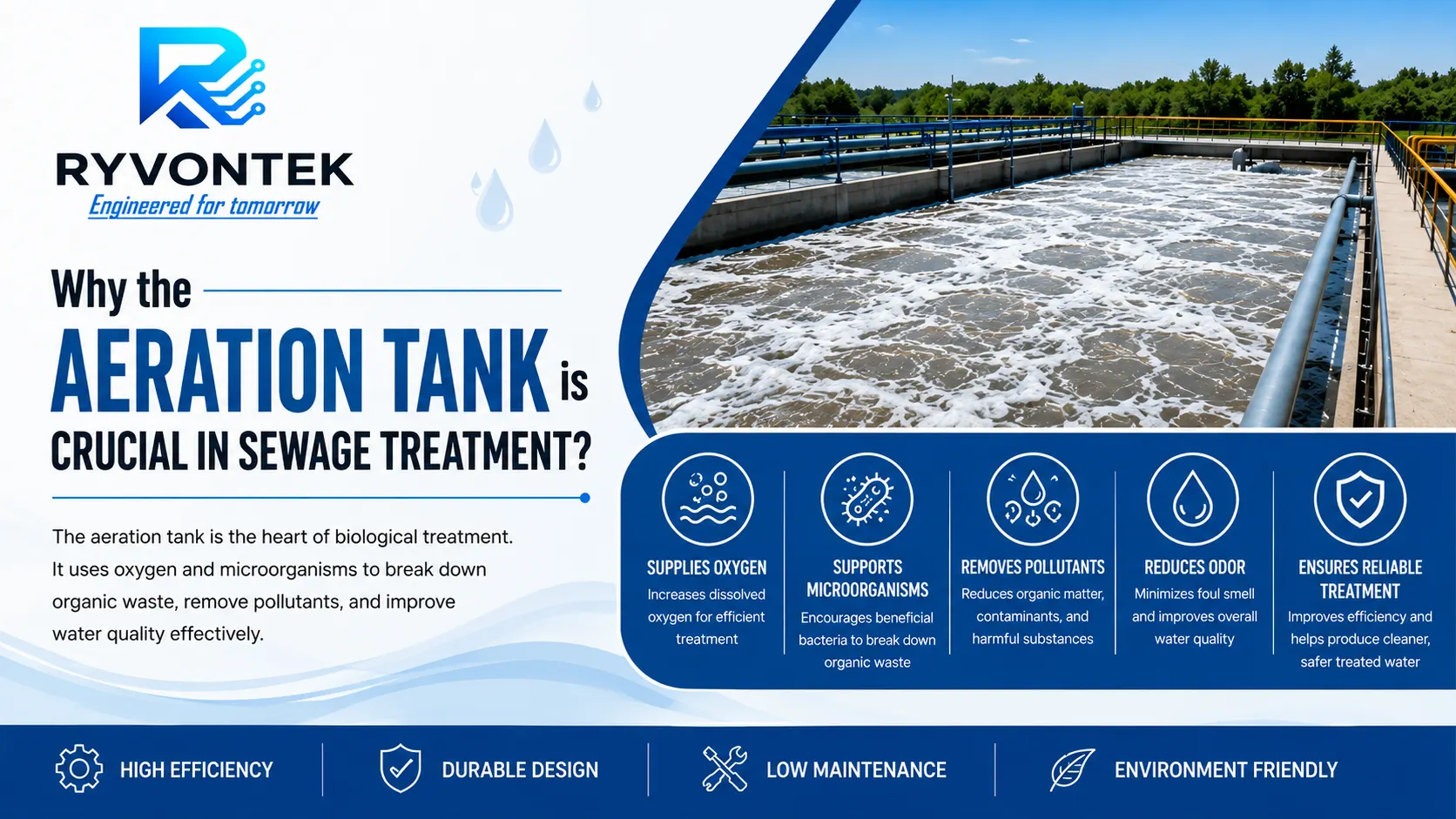
Water Treatment Systems play a crucial role in maintaining clean and safe water for industrial, commercial, and residential use. One of the most important components in modern water and wastewater treatment plants is the Aeration Tank. These tanks are specially designed to improve water quality by increasing oxygen levels and supporting the biological treatment process.
What is an Aeration Tank in Wastewater Treatment?
An Aeration Tank is an important part of wastewater treatment systems where air is introduced into water to promote the growth of beneficial microorganisms. These microorganisms break down harmful organic substances, pollutants, and waste materials present in wastewater. The aeration process helps improve water quality and prepares it for further treatment or safe disposal.
How Does an Aeration Tank Work?
1. Wastewater Enters the Tank
The untreated sewage or wastewater first enters the Aeration Tank from the primary treatment process. This water contains organic waste, harmful contaminants, and suspended particles.
2. Air is Supplied into the Tank
Air or oxygen is continuously supplied into the tank using blowers, diffusers, or aerators. This process increases the dissolved oxygen level in the wastewater.
3. Growth of Microorganisms
The oxygen-rich environment supports the growth of beneficial bacteria and microorganisms. These microorganisms feed on organic waste and harmful pollutants present in the wastewater.
4. Breakdown of Organic Matter
The microorganisms decompose organic contaminants into simpler and safer substances. This biological treatment process helps reduce pollution and improves water quality.
5. Formation of Activated Sludge
As microorganisms consume waste materials, they form biological flocs known as activated sludge. This sludge contains bacteria and organic particles.
6. Separation Process
After aeration, the treated water flows into a settling tank where activated sludge settles at the bottom. Clean water is separated and sent for further treatment or safe discharge.
Importance of Aeration Tanks in Sewage Treatment
1. Supports Biological Treatment Process
Aeration Tanks create the ideal environment for microorganisms to survive and multiply. These microorganisms consume organic waste materials and help purify sewage water effectively.
2. Increases Oxygen Levels
The aeration process increases dissolved oxygen in wastewater, which is essential for bacteria to perform the decomposition process efficiently.
3. Removes Harmful Pollutants
Aeration Tanks help reduce contaminants, suspended solids, and harmful organic substances from sewage water, improving overall treatment efficiency.
4. Reduces Foul Odor
Sewage water often produces unpleasant odors due to stagnant waste. Aeration helps minimize bad smells by preventing the formation of harmful gases.
5. Improves Water Quality
Proper aeration significantly improves the quality of treated water, making it safer for discharge or reuse in industrial and agricultural applications.
6. Enhances Treatment Efficiency
Aeration Tanks accelerate the sewage treatment process, ensuring faster and more efficient wastewater purification.
Benefits of Aeration Tanks
• Improves wastewater treatment efficiency
• Removes harmful pollutants and contaminants
• Reduces foul odor from sewage water
• Enhances dissolved oxygen levels
• Supports biological treatment processes
• Produces cleaner and safer treated water
• Suitable for industrial and municipal treatment systems
Conclusion
Aeration Tanks work by introducing oxygen into wastewater to support beneficial microorganisms that naturally break down pollutants, organic waste, and harmful contaminants. This process improves sewage and wastewater treatment efficiency, reduces pollution, and helps produce cleaner treated water. Ryvontek Infra offers reliable and durable Aeration Water Treatment Tank solutions designed for effective treatment performance and long operational life in industrial and municipal applications.